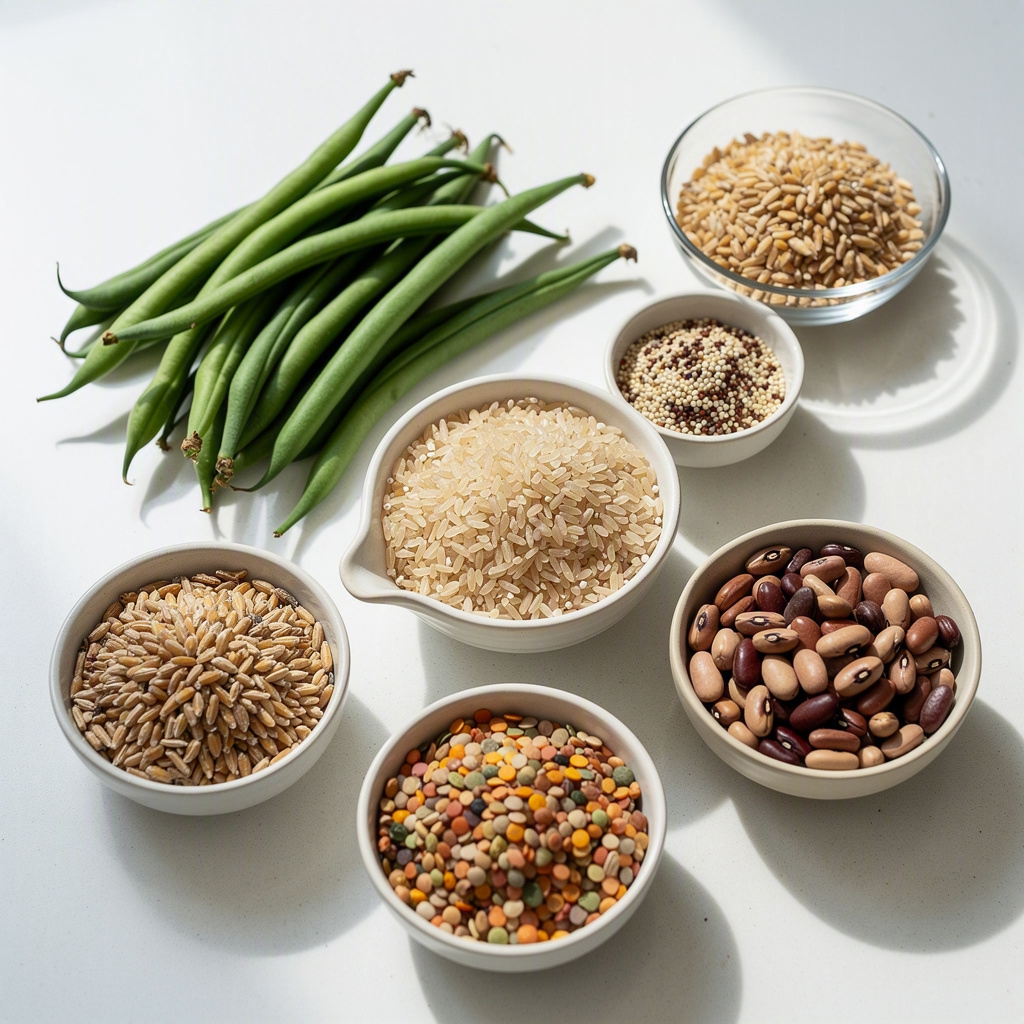
Fiber supports gut health, helps regulate blood sugar, and can lower your risk of certain diseases. But it matters whether that fiber comes from a powder, a bar, or a plate of real food. Here's why whole foods come out ahead.
What happens when you eat whole-food fiber
When you eat a fibrous food like green beans, it moves through a beneficial journey: chewing breaks it down, your stomach mixes it with digestive juices, your small intestine absorbs the nutrients, and your large intestine pulls out water while fiber adds bulk. Along the way, that fiber slows digestion, feeds your gut, and keeps things moving. Whole foods do several things a supplement can't:
- They deliver complex carbs. These take longer to digest than simple sugars, so glucose enters your bloodstream gradually instead of all at once.
- They're nutrient-rich. Whole foods carry vitamins, minerals, polyphenols, and antioxidants that improve insulin sensitivity and protect the insulin-producing cells in your pancreas from stress. The nutrients work together — a synergy a single isolated fiber can't reproduce.
- They offer variety. A mix of soluble and insoluble fiber, plus a broad range of micronutrients, supports both digestion and steady blood sugar.
- They feed your gut. The fibers in whole foods act as prebiotics, nourishing beneficial bacteria that produce short-chain fatty acids. These calm inflammation, fuel your colon cells, and help regulate blood sugar and appetite.
- They have a lower glycemic index. High-fiber whole foods raise blood sugar slowly, avoiding the spikes that drive insulin resistance and fat storage over time.
Where supplements fall short
Fiber supplements like psyllium husk, methylcellulose, and inulin are genuinely useful for regularity — they absorb water and add bulk to keep you comfortable. They can even modestly blunt the glycemic load of a meal. But for blood sugar control, they can't match whole foods, for three reasons:
- No nutrient synergy. Supplements deliver fiber alone, without the vitamins, minerals, and antioxidants that help whole foods slow digestion.
- Only one type of fiber. Most supplements contain a single fiber, while whole foods supply both soluble and insoluble fiber — and the variety is what matters most for steady blood sugar.
- Fewer prebiotic benefits. The diverse fibers in real food feed a healthier, more varied gut microbiome than a single isolated fiber can.
The bottom line
Use a supplement as a short-term tool for regularity if you need one — but build your blood sugar strategy around the real thing. Fruits, vegetables, whole grains, beans, nuts, and seeds give you fiber and everything that travels with it.
Let AIM help you take the first step
Our AI-powered meal planner builds plans around whole, fiber-rich foods chosen for your conditions and goals — no guesswork required.
Build my meal plan