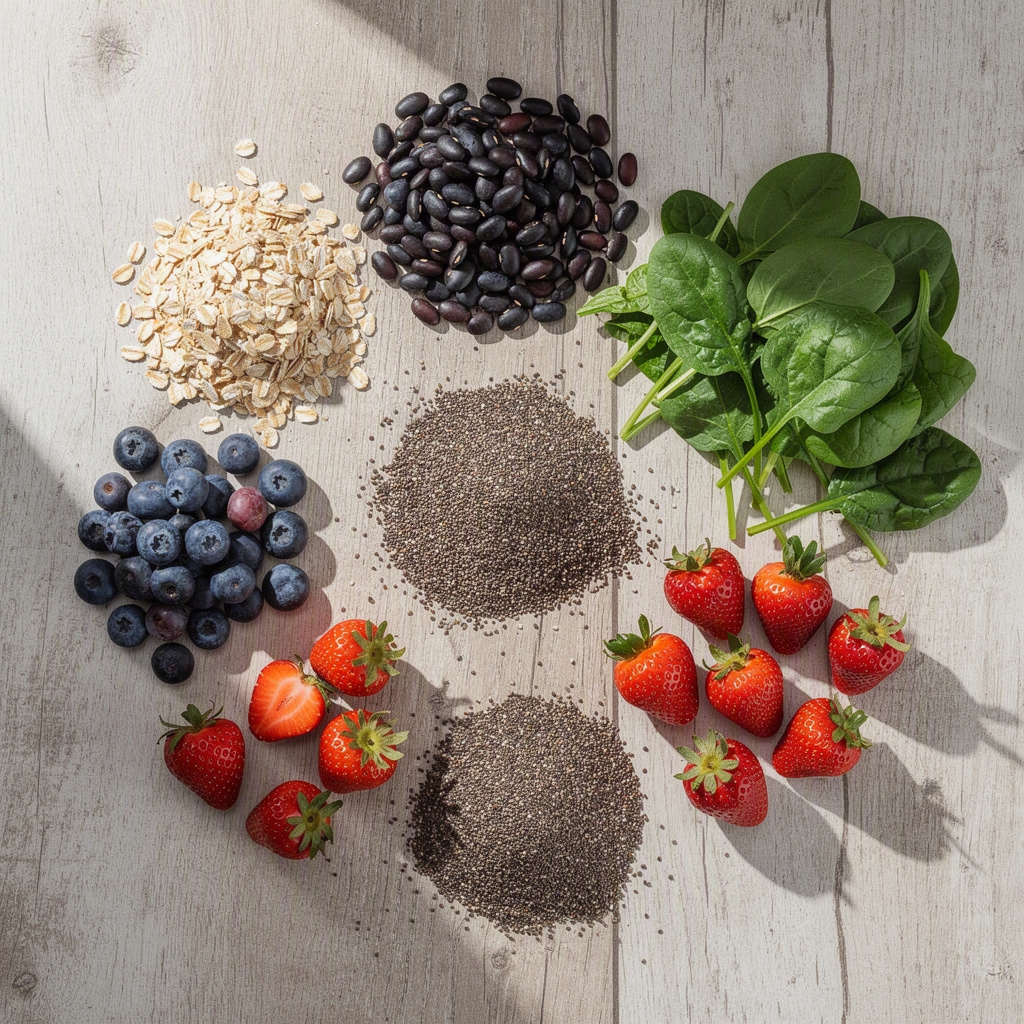
The "skeleton" of every plant
Just as bones form the skeleton of an animal, fiber is the skeleton of a plant. It's a type of carbohydrate your body can't actually digest, and that's exactly what makes it so valuable. Fiber keeps your digestive system healthy, supports a healthy weight, and helps hold your blood sugar steady through the day. It comes in two main forms — soluble and insoluble — and your body needs both.
Soluble fiber: the gentle gatekeeper
Soluble fiber dissolves in water and forms a soft, gel-like mass in your gut. That gel slows how quickly sugar is absorbed into your bloodstream, which may moderate post-meal changes that can leave you tired and hungry an hour later. As a bonus, the same gel grabs onto cholesterol in your intestines and carries it out before it can be reabsorbed — so soluble fiber supports your heart at the same time it steadies your blood sugar.
You'll find it in oats and oat bran, beans, lentils, chia seeds, flax, nuts, barley, citrus, apples, strawberries, blueberries, pears, and sweet potatoes.
Insoluble fiber: nature's broom
Insoluble fiber doesn't dissolve. Instead it acts like a broom, sweeping food through your digestive tract and adding bulk that keeps you regular. By keeping digestion moving at a steady, predictable pace, it indirectly supports stable blood sugar too.
Reach for whole grains, zucchini, cauliflower, bell peppers, broccoli, carrots, avocado, and leafy greens.
How much do you actually need?
Most adults should aim for about 25 to 30 grams of fiber a day, spread evenly across meals for the best blood sugar response. There's no single right way to get there. A day that reaches roughly 30 grams might look like:
- About 10 grams per meal — for example, 2/3 cup of lentils or black beans, one medium avocado, or a cup of frozen raspberries.
- About 7 grams per meal plus a 9-gram snack — such as 2 tablespoons of chia seeds, a medium artichoke, a cup of cooked barley, or four dried figs.
- About 5 grams per meal plus two 7-gram snacks — like a cup of cooked oats, a quarter cup of almonds, or a cup of cooked broccoli.
A plant-rich plate full of vegetables, fruit, whole grains, seeds, nuts, and beans gets you there naturally — and gives you a healthy mix of both fiber types along the way.
Easy ways to sneak in more
You don't need a whole new diet. Add veggies or fruit to a smoothie, stir riced cauliflower into your rice, toss quinoa into a soup or salad, or sprinkle chia or pumpkin seeds over breakfast (1–2 tablespoons is plenty). If you're starting from a low-fiber diet, build up slowly — about 2 to 3 extra grams a day over a week — and drink plenty of water, since fiber needs fluid to do its job.
Let AIM help you take the first step
Our AI-powered meal planner builds customized plans around the beneficial, fiber-rich foods that fit your conditions and goals.
Build my meal plan