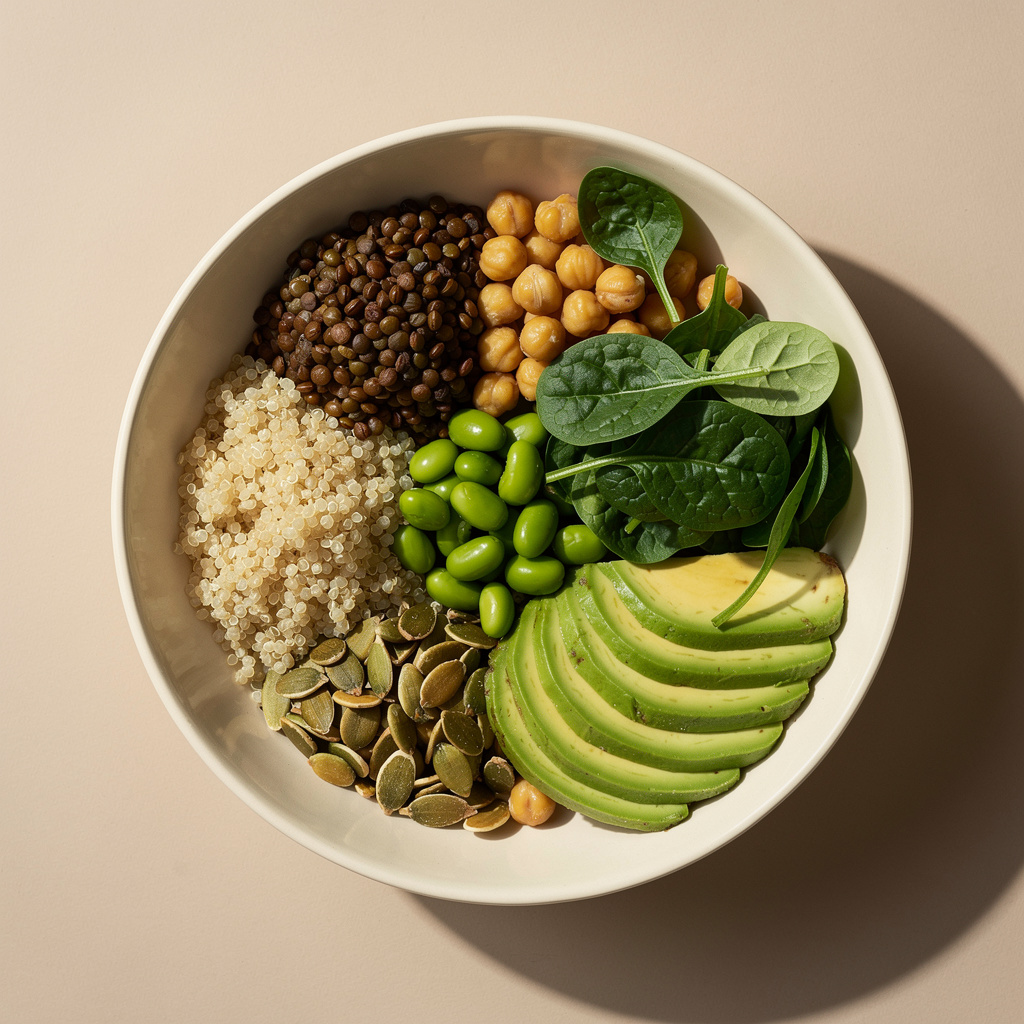
For a long time, vegetables were treated as the supporting act — a little something on the side of the "real" meal. But you don't build a satisfying plant-based plate by simply taking the meat off the plate and hoping for the best. You build it by giving vegetables, grains, and legumes the starring role they deserve. Once you learn to think this way, meatless meals stop feeling like something is missing and start feeling complete. Here are the whole-food anchors that make it happen.
1. Beans and Lentils
Beans and lentils are the quiet workhorses of plant-based cooking — rich in protein and fiber, deeply satisfying, and endlessly adaptable. A pot of lentils, a can of chickpeas, or a scoop of black beans can anchor a soup, a salad, a grain bowl, or a hearty veggie burger. They fill you up, they're gentle on the grocery budget, and they pair beautifully with almost any flavor in the world.
2. Whole Grains
Grains bring warmth, substance, and staying power to a plate. Quinoa and millet are especially worth knowing — small but mighty, they offer a more complete kind of plant protein. Brown rice, oat berries, and farro add chew and heartiness. Cook up a batch at the start of the week and you've got a ready base for bowls, salads, and stuffed vegetables anytime hunger strikes.
3. Tofu and Tempeh
If you're new to them, soy foods like tofu and tempeh are worth a fresh look. Tofu is a blank canvas — press out the water, then bake, pan-fry, or stir-fry it, and it soaks up whatever flavors you give it. Tempeh is firmer and nuttier, with a satisfying bite. Both bring protein and a hearty texture that makes a meal feel like a meal.
4. Nuts and Seeds
A scattering of nuts and seeds does more than add crunch — it brings healthy fats and protein that help a meal satisfy. Toasted almonds, walnuts, pumpkin seeds, sunflower seeds, or a sprinkle of hemp seeds turn a simple salad or grain bowl into something nourishing and complete. Keep them in the freezer so they stay fresh, and toast them just before serving for the best flavor.
5. Eggs and Dairy (If You Eat Them)
For families who include them, a fried egg over a vegetable dish or a dollop of yogurt on a curry adds richness and protein in seconds. Greek yogurt makes a creamy base for dips and dressings; a little cheese brings savory depth. And if you're cooking plant-based, don't worry — every one of these can be swapped or skipped, with beans, tofu, nuts, and seeds carrying the plate just fine.
The Simple Plate Formula
When dinner feels uncertain, lean on this gentle formula:
- An anchor — beans, lentils, a whole grain, or tofu for substance and protein.
- Plenty of vegetables — roasted, sautéed, or fresh, in as many colors as you can manage.
- A flavor finish — a squeeze of lemon, a drizzle of good oil, fresh herbs, or a sprinkle of seeds to tie it all together.
Mix and match across those three, and you'll never be far from a meal that's balanced and filling.
The Heart of the Lesson
A nourishing meatless meal isn't about substitution or sacrifice — it's about treating whole plant foods as ingredients worthy of the center of the plate. Keep a few anchors on hand, build around them with vegetables and a bright finish, and you'll find that eating well this way is simpler, and more satisfying, than you ever expected.
This post is for educational purposes only and is not intended as medical advice. Always consult a trusted health practitioner about your individual needs.
Build this into your week
Use AIM to turn whole-food ideas into family meals, snacks, and a ready-to-shop plan.
Build my meal plan